Velvet Scars – A Collaborative Experiment in Music and Interpretation
Velvet Scars is a music project created by songwriter Claes Eklund, built around the idea that a single set of lyrics is never a fixed outcome, but a shifting structure of possible interpretations. Rather than existing as a traditional band or a single genre identity, it functions as a flexible creative framework where text, sound, and emotional perspective are continuously reconfigured.
Each piece begins with a written narrative—often one to four pages—containing characters, emotional trajectories, imagery, and atmosphere. This material is not treated as a finished composition, but as a set of emotional and structural parameters that define intention while leaving space for transformation.
From this foundation, AI is used as an interpretive instrument within the creative workflow. Through carefully constructed prompts, the material is shaped into multiple musical directions. These prompts define not only genre and stylistic direction, but also detailed performance behavior: how instruments are articulated (attack, decay, rhythmic density, tonal saturation, phrasing style), how arrangements evolve across sections, and how dynamics and texture shift over time.
Vocal expression is treated with similar precision. Different character interpretations are constructed through directional control of tone, register, phrasing, breath, emotional intensity, and timing. A single song may shift between restrained intimacy and expanded emotional projection, creating contrast through performance design rather than rewriting meaning.
These interpretations are not treated as separate artists, but as distinct characters—constructed interpretive identities generated through controlled AI-assisted processes. Each character represents a specific emotional lens through which the same lyrical core can be experienced differently.
Within this system, four recurring interpretive identities have emerged: Father Echo, Gravel Stone, Lux Noir, and Vidar Kolbrand. Together, they form an emotional spectrum of abstraction, grounding, sensitivity, and restrained desire.














Father Echo
Father Echo operates as a fragmented, abstract interpretive space centered on repetition, memory distortion, doubt, and unresolved internal dialogue. He exists outside narrative continuity, functioning more as a destabilized signal than a character, where meaning is intentionally incomplete and unresolved.
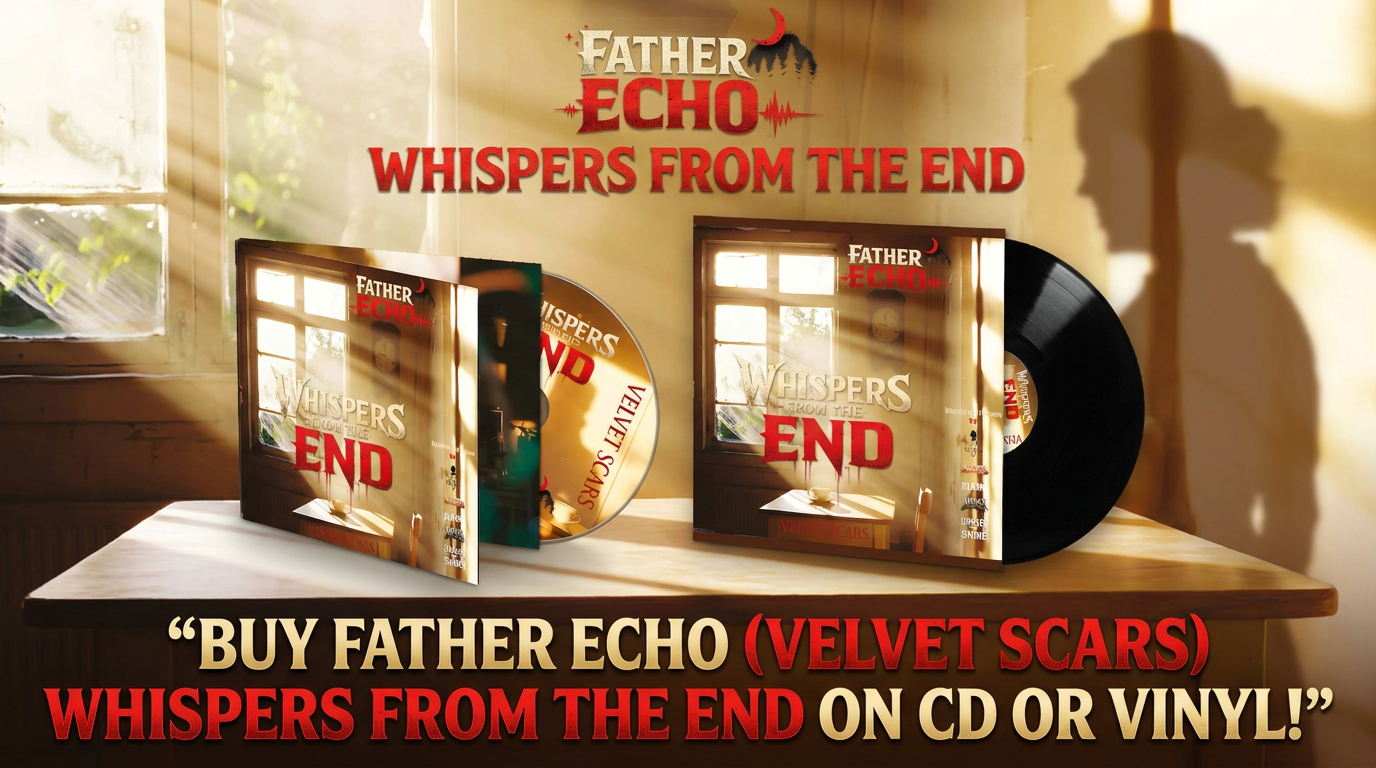
On May 19, Father Echo released “Whispers from the End” across all major streaming platforms.
Gravel Stone

Gravel Stone is grounded in lived emotional experience and everyday psychological texture. He embodies loneliness, connection, frustration, and small-scale emotional truth. His interpretations are direct, narrative-adjacent, and rooted in human continuity, functioning as an emotional anchor within the system.
Lux Noir
Lux Noir explores emotional perception through a feminine interpretive lens, developed as a counterpart to Vidar Kolbrand. She focuses on introspection, vulnerability, and the subtle articulation of desire and emotional complexity.
Her function within the system is not to define gendered expression literally, but to demonstrate how emotional meaning shifts depending on perspective framing. Through her, the same lyrical material can be reinterpreted with softer dynamics, restrained vocal delivery, atmospheric instrumentation, and heightened attention to emotional nuance and subtext.

Vidar Kolbrand

Vidar Kolbrand emerged from the quiet, unspoken emotional space of restrained desire—the part of emotional experience defined by longing without action, attraction without resolution, and love shaped by awareness of consequence.
Within the Velvet Scars framework, Vidar represents the emotional state of contained intensity. His perspective is built around the tension between feeling and restraint: emotions that are fully present internally but partially withheld externally. He is defined not by action, but by what is not acted upon.
His lyrical identity explores forbidden or unattainable emotional states—love that exists in the space between awareness and limitation. Rather than resolving these emotions, his interpretations preserve them in suspension, allowing longing itself to remain the central expressive force.
Vidar’s character also functions as a control layer for performance design within AI prompting. His musical direction typically emphasizes restrained vocal phrasing, controlled dynamics, and tension-driven instrumentation. Silence, hesitation, and minimalistic emotional escalation are often as important as melodic or harmonic content.
Narratively, Vidar is a quiet observer of emotional complexity. He moves through situations with sensitivity and awareness, often perceiving emotional undercurrents that remain unspoken. His presence is subtle but charged, defined by internal intensity rather than external expression.
Within the system, Vidar Kolbrand functions as the counterpart to Lux Noir. Where Lux Noir translates emotional depth into introspective articulation and expressive nuance, Vidar contains emotion within boundaries, preserving tension rather than releasing it. Together, they form a dual structure for exploring the same emotional material from opposite interpretive directions.
The process remains iterative and hands-on throughout. Generated material is reviewed, reshaped, recombined, or discarded. Final compositions are formed through selection, manual refinement, and detailed control within tools such as Suno, where structure, instrumentation, and vocal behavior are continuously adjusted until the intended emotional outcome is achieved. Human intention remains central at every stage; AI operates as an interpretive engine within a directed creative system.
Across releases such as “Shadows of Goodbye,” these characters—including Father Echo, Gravel Stone, Lux Noir, and Vidar Kolbrand—transform the same lyrical material into distinct sonic identities, each revealing different emotional dimensions embedded within the same text.
Ultimately, Velvet Scars exists as a controlled space of experimentation between language and sound, where meaning is not fixed but continuously reinterpreted. It investigates how structured prompt design and interpretive systems can reshape music into multiple emotional states, turning each song into a variable rather than a conclusion.
News
- “Whispers from the End” — New Release on May 19
 On May 19, Father Echo releases “Whispers from the End” on all streaming services. What might first appear to be a single
 - Upcoming EP: Ash in My Blood
 Velvet Scars’ next EP, Ash in My Blood, dives deep into loss, longing, and personal struggle through the lens of multiple characters,
 - If It Ever Falls Apart – Velvet Scars on Unspoken Desire
 Some feelings exist long before circumstances make them visible, and no one can choose whom the heart notices. “If It Ever Falls
 - Rooms We Didn’t Leave – Velvet Scars & Lux Noir
 Some songs carry a memory long after the moment has passed. “Rooms We Didn’t Leave” is one of those songs — a
 - Just a Glimpse of You – Velvet Scars & Vidar Kolbrand
 Every once in a while, someone crosses your path and leaves a mark — not with grand gestures, but in the smallest
 - Shadows of Goodbye
 “Shadows of Goodbye” is the first release from Velvet Scars, a project built around exploring how a single set of lyrics can
Discography
- Whispers from the End
- “Whispers from the End” — New Release on May 19
- Ash in My Blood
- Shadows of Goodbye

MORE FROM VELVET SCARS
MORE FROM VELVET SCARS